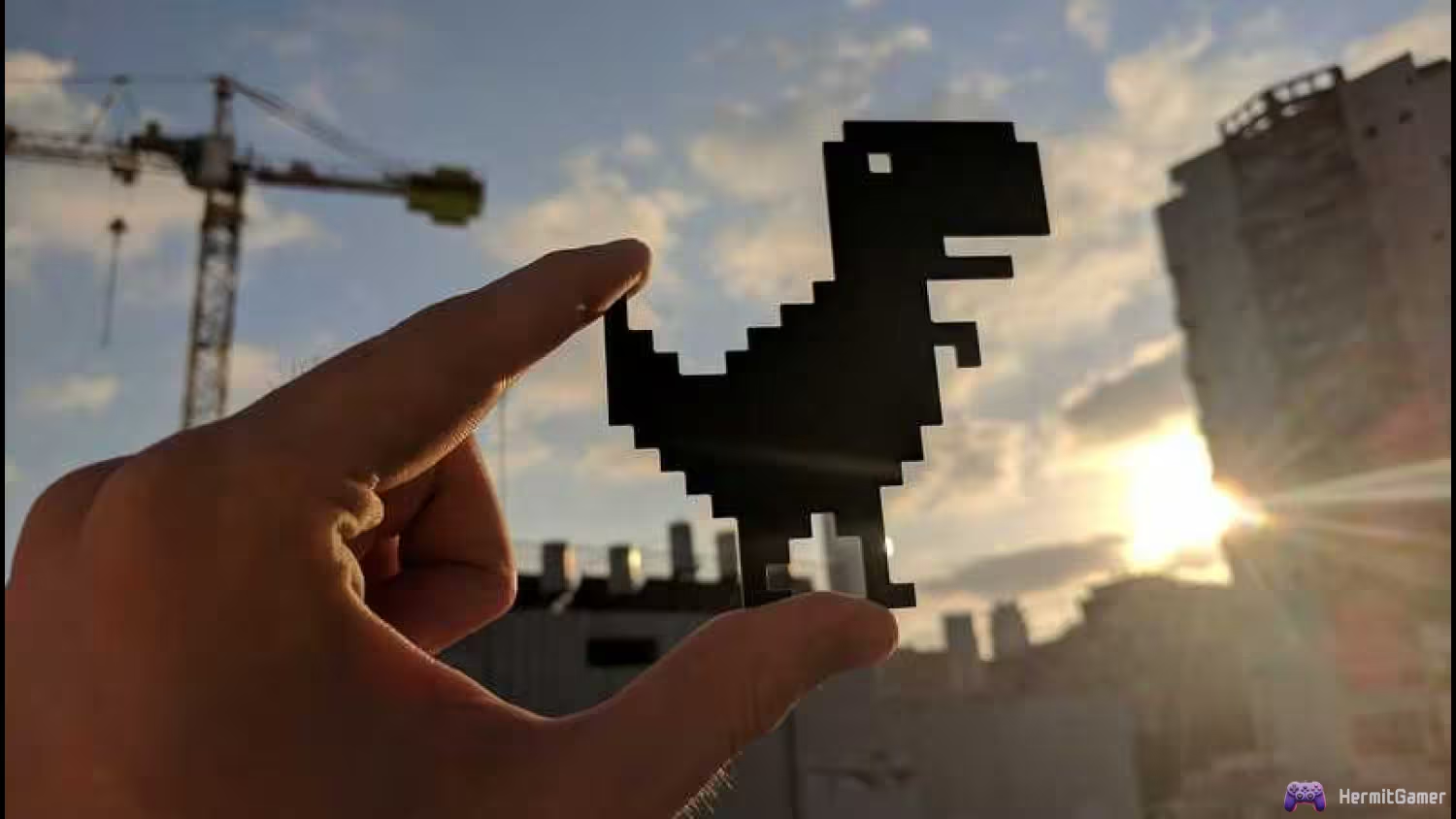
If you’ve ever challenged yourself to beat your personal best while offline in Chrome, you already know the deceptively simple charm of the no internet game. What starts as a casual tap or spacebar press quickly becomes a test of reaction time, concentration, and endurance. This guide dives deep into the mechanics and mindset needed to take your scores from average to elite.
Understanding the Game Mechanics
The Speed Curve
The dinosaur game accelerates gradually, starting at a manageable pace and increasing speed in small increments. While it feels continuous, there are specific speed thresholds where the game subtly changes obstacle patterns.
- Speed increases every ~100 points until reaching a plateau.
- After about 900 points, the pace feels significantly faster, requiring tighter jump timing.
- Around 6000 points, the game reaches near-max speed, testing reflexes over endurance.
Obstacle Patterns
Obstacles are generated in semi-random sequences but follow certain rules:
- Cacti clusters appear in short, medium, or tall forms, sometimes grouped.
- Pterodactyls arrive after a certain score threshold, flying at varying heights.
- Gaps between obstacles shrink as speed increases.
Building a Pro-Level Strategy
Warm-Up Before a Serious Run
- Play two or three short runs to calibrate your eyes to speed changes.
- Use these runs to find your hand placement and rhythm.
Micro-Adjustments
- Short hops clear low cacti faster, giving you more time to react.
- Long jumps are best for tall cactus clusters or double obstacles.
- Quick ducks handle low-flying pterodactyls without breaking stride.
Table of Advanced Techniques
| Technique Name | Description | Best Use Case |
| Short Hop | Tap jump key lightly for minimal airtime | Low cactus clusters at high speed |
| Long Arc | Hold jump key slightly longer for maximum height/distance | Tall cactus or double obstacles |
| Early Duck | Press down just before pterodactyl appears in hitbox | Mid/low flying pterodactyls |
| Rhythm Lock | Maintain consistent jump cadence to avoid overreactions | Sustained high-speed sections |
| Rest Reset | Pause for 10–15 seconds between runs to refocus | Competitive score attempts |


 Back to Top