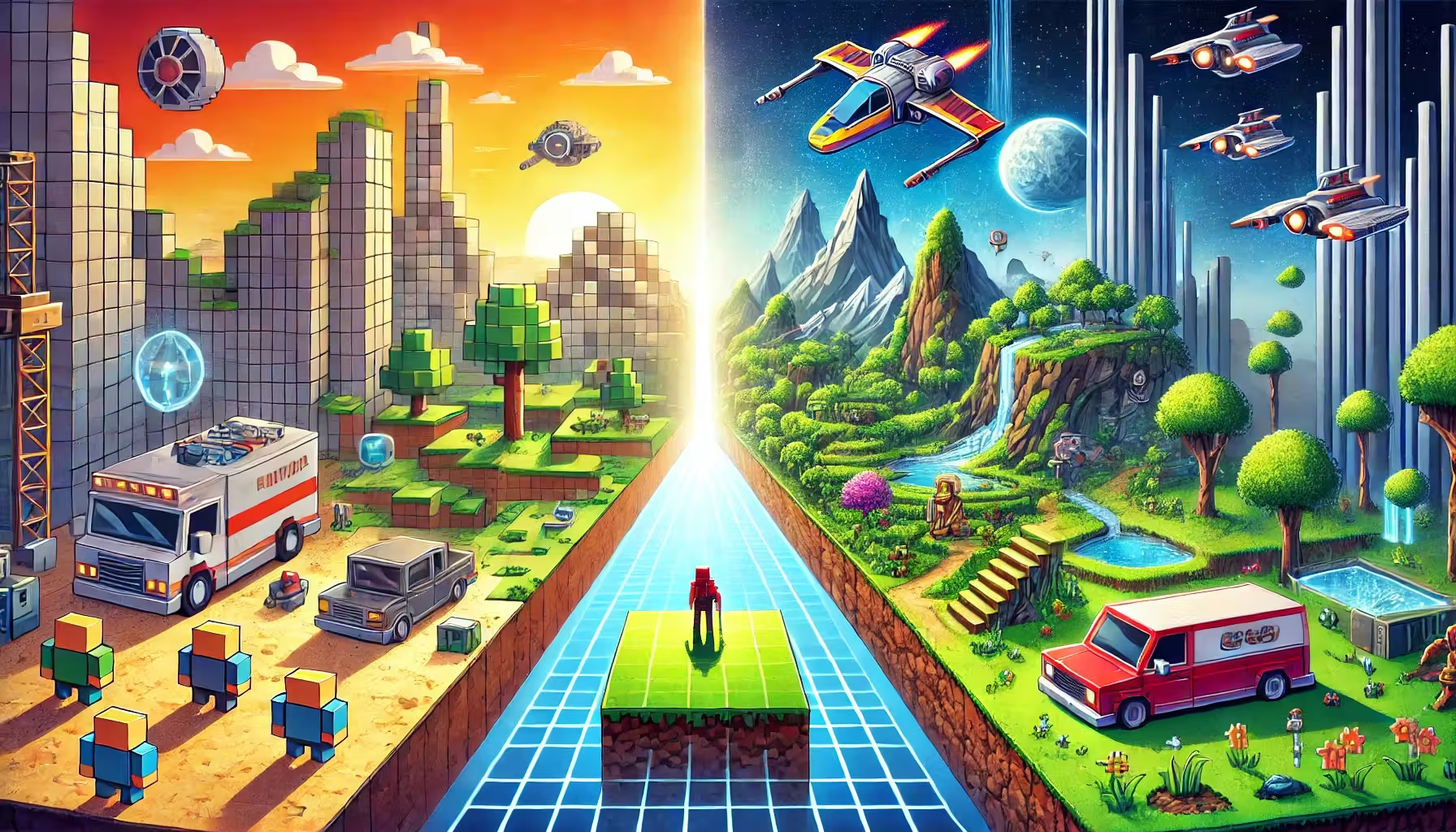
Open-world games have come a long way. They started simple and have grown into big, exciting worlds. These games now transport players to living, breathing worlds. Online casinos like BetLabel are also considering introducing open-world betting games.
The Humble Beginnings of Open-World Games
At first, open-world games were simple. Games like "Ultima" (1981) and "The Legend of Zelda" (1986) let players explore freely. Players could explore at their own pace. For their time, these games were groundbreaking. They broke away from linear levels. Instead, they introduced large maps with many choices.
The technology was limited back then. Graphics were pixelated, and worlds were basic. Yet, the idea of freedom in games captivated players. It laid the foundation for future innovations.
The Rise of 3D Worlds
The shift to 3D changed everything. Games like "Grand Theft Auto III" (2001) changed everything. Players didn’t just explore; they lived in a city. You could drive, interact with NPCs, and create chaos.
This era also introduced improved mechanics. Characters could jump, swim, and interact with their surroundings. Developers experimented with weather systems, day-night cycles, and dynamic events. These features made worlds feel alive.
3D environments made open-world games immersive. Gamers felt like they were part of something real. It was no longer about beating levels. It became about experiencing a world.
How Storytelling Transformed Open-World Games
Storytelling became a key focus. Developers realized players wanted more than just exploration. They wanted meaningful narratives. Games like "The Witcher 3: Wild Hunt" showed this.
In "The Witcher 3" the world felt personal. Side quests were detailed and impactful. Decisions had consequences. The player’s choices shaped the story. This emotional depth made the game unforgettable.
Today, stories in open-world games rival movies. They’re cinematic, layered, and engaging. Players feel connected to characters and their journeys.


 Back to Top