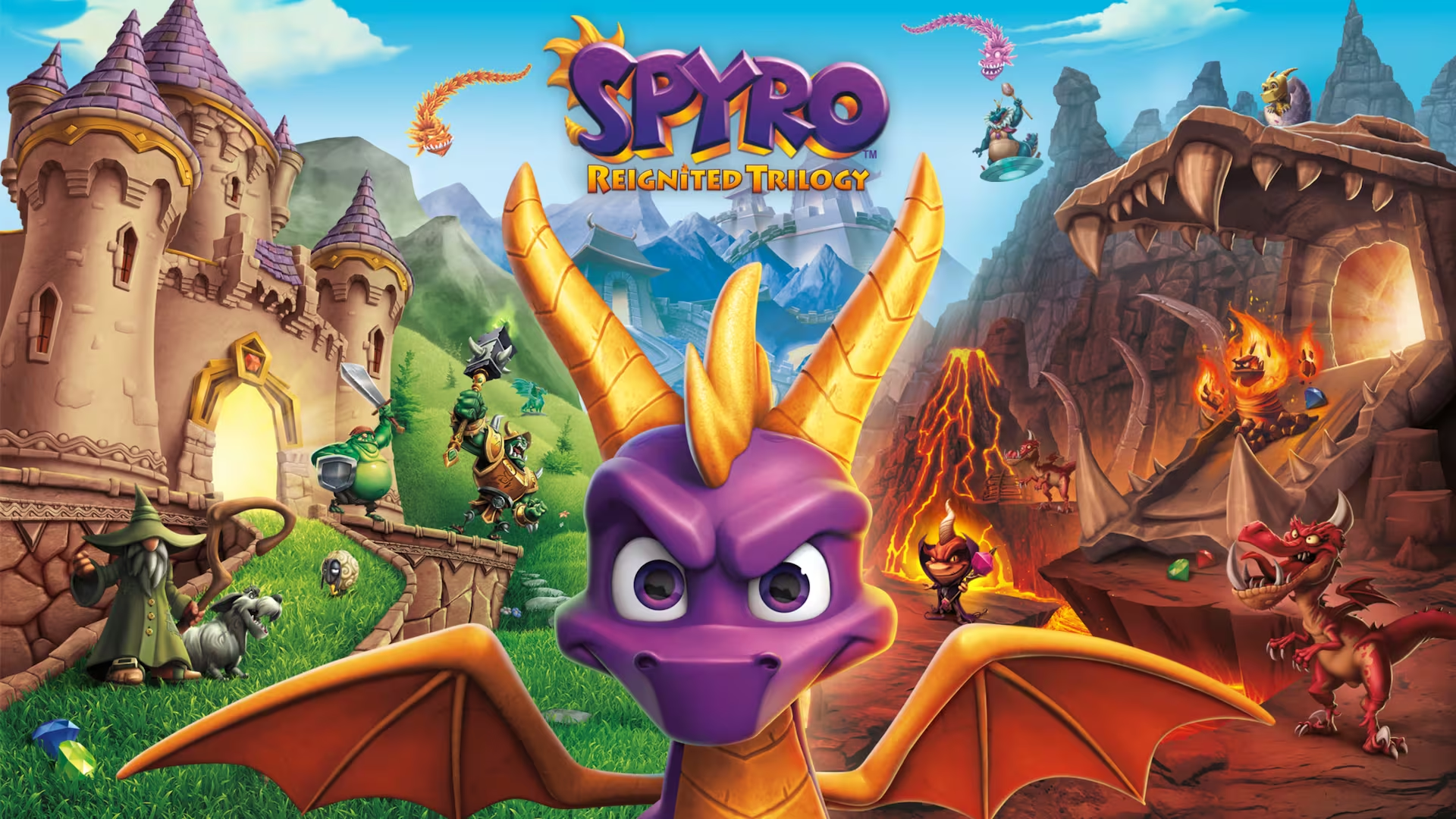
Insomniac’s Spyro the Dragon trilogy of platforming adventures on the original PlayStation has held up marvelously well, as any fan of those games will tell you. Unlike other platformers of the era on console, Spyro seemed to hew most closely to the Collect-a-Thon template that platformers on the Nintendo 64 established, and that other platformers since have followed to this day.
In the vein of Crash Bandicoot N. Sane Trilogy, Activision has taken the Spyro trilogy and updated it wholesale for the current generation of consoles. Spyro Reignited Trilogy was handled by Toys for Bob, who were also behind the Skylanders series, which in turn originally began as a Spyro spin-off.
Their familiarity with the license and their reverence for the source material permeates every frame of the experience with Spyro. Calling this collection a remaster is not doing it justice. This is more akin to a remake designed to live up to Spyro as we remember it, not Spyro as it was. Every frame of the game is bursting with color, whimsy, and life, and the game in general seems to be far closer to the striking art of the original series than the PlayStation could ever have hoped to render.
Advantage
-
 Beautiful graphics
-
Pleasant gameplay
Disadvantages
-
 The first part, Spyro the Dragon, can be boring towards the end

The strong art is backed by modern rendering techniques, which means Reignited Trilogy wouldn’t look out of place next to other current-gen games, and some liberal reinterpretations are involved to make the games look and come across even better than the original titles did.
For instance, the first Spyro game has a unique design for every single dragon that you must rescue. It’s such a small detail since there are so many of them, but it impresses the personality of each unique one upon you, the player, and sells the whimsical world of the game further.

Similarly, enemies and NPCs now have delightful animations that emphasize their personalities even further. As thorough as the visual overhaul of the games is, Toys for Bob has had the sense not to touch the actual gameplay. Here, Spyro plays exactly as you remember, from the movement to the jumping, gliding, hovering, charging, and more. The physics of the momentum and inertia are all there, and the source material here has been dealt with the most delicate touch possible.
On the whole, this is a good thing, as mentioned, the titles hold up remarkably well, and messing with the physics could cause fans and purists to take umbrage, which will not happen here. In some cases, however, it can also lead to problems, such as with the game’s camera, which is a hopeless exercise in frustration. Both the manual camera and the automatic one cannot keep up with the action and get in the way far more often than they actually properly frame the action.

The actual levels here are exactly as you remember, structurally. Graphically, of course, they come together like never before, teeming with color and a distinct sense of identity, as already noted. However, the actual layout and design have not been tampered with in the slightest. This is a surprisingly good decision, even though the levels, which felt gigantic in 1998 and onwards, are mere minutes long trumps today. They’re expertly designed, perfectly tuned to Spyro’s moveset, as well as the unique gimmick of the level that you are currently playing.
They also lend themselves well to curiosity. There’s always a critical path for you to take, and you can follow that and rush to the end of the stage if you want. However, players who go out of their way will find their curiosity amply rewarded, and those who return to earlier stages later on will find more layers unveiled.









 Back to Top